.png)


.png)



AI-Powered Key Takeaways


Table of Contents

Introduction
Most teams stop testing once they confirm a feature “works.” But here’s the thing: your users don’t just want features that work. They want apps that stay fast, reliable, and responsive across devices, locations, and networks.
That’s why modern engineering teams are considering a dual approach, from their focus on functional testing or performance testing to combining both. This dual testing shift is what separates smooth, scalable digital-first experiences from those that fail under pressure.
What Functional and Performance Testing Actually Mean
Functional Testing
Functional testing verifies that software behaves according to specified requirements. It answers the question: Does the feature work as intended?
It focuses on evaluating a system’s functions by using inputs and observing the corresponding expected outputs. Test cases are designed based on specifications, ensuring that every workflow, such as login, checkout, or search, delivers the correct result.
Performance Testing
Performance testing measures how efficiently a system responds and scales under load. It answers: Does it perform well when real users interact with it?
Performance efficiency covers:
- Time behavior: Response time, latency, throughput
- Resource utilization: CPU, memory, I/O consumption
- Capacity: Maximum number of concurrent users or transactions
Together, these form the backbone of reliable, measurable performance testing practices.
Why the Shift Matters for Digital-First Products
Today’s digital-first applications serve millions of users globally. They rely on distributed systems, APIs, and third-party integrations that must perform consistently under varying conditions.
A feature that works in QA may fail in production if it wasn’t tested for:
- High concurrency or heavy traffic
- Real-world network variations (3G, 4G, 5G, Wi-Fi)
- Device-specific behavior or memory constraints
- Geographic latency and CDN caching differences
Functional vs performance testing isn’t a debate; it’s a continuum. To meet user expectations, teams must test for both correctness and resilience.
A Practical Model for Combining Functional and Performance Testing
1. Define Both Functional and Performance Requirements
Performance means nothing if the feature doesn't work. While the "happy path" (the ideal user flow) is important, functional testing is the foundation because it validates the complex logic that performance tests will later strain. You must document how functional needs and performance limits work together.
Functional requirements should clearly describe:
- What the user can do
- What should happen when something goes wrong
- How data should be validated
- How systems should behave across different user roles and device types
At the same time, performance requirements must define how fast and stable those same features should be under real usage.
Example: E-Commerce
- Functional Requirement: Verify that the "Add to Cart" logic enforces real-time inventory limits. If the stock count is 1 and two users click "Add" simultaneously, the system must lock the item for the first request and immediately return an "Out of Stock" error to the second user, preventing the system from adding unavailable items to a cart.
- Performance Requirement: The "Add to Cart" action must complete in under 800 milliseconds for 95% of users, even when 2,000 people are shopping simultaneously.
Defining both together ensures the system is not only correct but also reliable at scale.
2. Design Tests with the Right Depth
A combined testing strategy should be structured and purposeful, not improvised. Functional testing focuses on making sure the system behaves correctly. Performance testing focuses on how well it functions under real usage.
Functional testing should confirm that:
- The system accepts valid inputs and rejects invalid ones
- User flows work correctly when moving from one step to another, such as login, onboarding, or subscription changes
- Business rules like pricing, discounts, and permissions behave correctly in all situations.
- The system responds properly when something fails, such as a payment error or network issue
- The user interface works consistently across screen sizes, resolutions, and device types
This ensures the product logic is solid before worrying about speed and scale.
Performance testing should then confirm how the system behaves under real-world conditons:
- How it performs during normal daily traffic
- How it behaves during peak usage
- What happens when traffic suddenly spikes
- Whether it stays stable during long periods of continuous use
- How well it handles increased demand when more users come in
To an end user, there is no difference between a button that doesn't work (functional error) and one that takes 10 seconds to respond (performance error)—in both cases, the feature is "broken."
Functional testing verifies that your code does what it is supposed to. Performance testing proves that your infrastructure can deliver that code to the user.
Without functional testing, you might deliver a very fast system that produces incorrect results. Without performance testing, you might build a perfect system that becomes inaccessible the moment real users try to log in.
A successful strategy treats these not as separate phases, but as two necessary halves of a usable product.
3. Use Production-like Environments
Create test environments that mirror production setups. This ensures reliable data on how your system performs under realistic network and hardware conditions. Leverage real devices, multiple OS versions, realistic networks, and geographic variation.
Recreate conditions that match real user scenarios. Test on real devices with different hardware profiles, covering multiple OS versions, and include real-world networks such as Wi-Fi, 4G, 5G, and congested or high-latency connections. Add geographic variation to account for regional latency differences. This produces performance data that accurately reflects how your app behaves in the real world.
4. Integrate Testing into CI/CD
Functional testing should run continuously as part of development:
- Small checks on every code change - testing only the features affected by the new code, to confirm the change itself works as expected.
- Full functional check - Re-running the entire functional test suite to make sure the new code has not broken any existing features.
- Regular cross-device functional validation - checking that the same features still work correctly across different devices, screen sizes, and operating systems.
Performance testing should also run as part of the pipeline:
- Frequent checks for critical workflows - verifying that login, search, checkout, video playback, or key APIs have not become slower after recent changes.
- Scheduled load, stress, and endurance tests - To test how the system behaves under normal, peak traffic, sudden spikes, and periods of continuous use.
Testing must act as a quality gate. If performance drops or errors rise beyond acceptable limits, the build should be reviewed before moving forward.
Functional tests ensure you haven't broken the code. Performance tests ensure you haven't broken the experience. If you only check functionality, you might release a feature that works perfectly but crashes the moment 500 users try to use it.
If you only check performance, you might ship a blazing-fast app that calculates the wrong prices. For a build to pass, it must be both correct and fast. If either metric drops, the gate closes, and the build fails.
5. Track the Right Metrics
Don't measure everything; measure what matters. We categorize KPIs (Key Performance Indicators) into three buckets to easily spot where the problem lies: the App, the Network, or the Device.
Functional KPIs
- Pass/Fail Rate:
- What it is: The ratio of successful test executions to failures in a given build.
- Why it matters: Indicates the stability of the build. If 20% of functional tests fail, running a performance test is a waste of time.
- Test Coverage:
- What it is: The percentage of features and code paths covered by automated or manual tests.
- Why it matters: You cannot optimize what you haven't tested. Low coverage means high risk of hidden bugs.
Application KPIs
- Load Time:
- What it is: How long it takes for the app to open and display usable content.
- Why it matters: First impressions count. If an app takes too long to open, users can leave frustrated.
- Response Time:
- What it is: The time between a user clicking a button (like "Checkout") and the system acknowledging that action.
- Why it matters: This is the "feel" of the app. High response times make the app feel sluggish or heavy.
- Error Rate:
- What it is: The percentage of requests that fail (e.g., "500 Server Error" or "Connection Timed Out").
- Why it matters: Speed is irrelevant if the request fails. A fast error is still an error.
Network KPIs
- Latency:
- What it is: The delay involved in sending data from the user to the server and back.
- Why it matters: High latency causes "lag." Even with fast internet, high latency makes real-time interactions (like gaming or VoIP) impossible.
- Packet Loss:
- What it is: Data that gets lost traveling across the internet and never reaches its destination.
- Why it matters: Causes "jitters" in video calls or missing information in data streams.
- Throughput:
- What it is: The actual amount of data successfully transferred over time.
- Why it matters: Ensures the "pipe" is big enough to handle heavy downloads or high-quality video streams without buffering.
Device KPIs
- CPU Usage:
- What it is: How hard the device's processor has to work to run your app.
- Why it matters: If your app uses 100% of the CPU, the phone will overheat, slow down other apps, and frustrate the user.
- Memory Usage (RAM):
- What it is: How much short-term memory the app requires.
- Why it matters: If an app hogs memory, the phone's operating system will force-close it to free up memory, which can cause a crash.
- Battery Consumption:
- What it is: How much power the app drains over time.
- Why it matters: Users will quickly uninstall an app if they notice it drains their battery, regardless of how good the features are.
A sudden spike in Functional Error Rates might actually be caused by high Network Latency. A "random" application crash (Functional) might actually be the result of sustained high Memory Usage (Device Performance).
By tracking these metrics side-by-side, you stop guessing whether a problem is caused by bad code or bad infrastructure. You gain the ability to pinpoint the root cause instantly—seeing not just that the user failed to checkout, but that they failed because high latency caused the payment API to time out. This is the power of the dual approach.
How HeadSpin Helps Teams Unite Functional and Performance Testing
HeadSpin’s platform empowers teams to combine functional testing and performance testing under real-world conditions, helping digital-first products achieve consistent, high-quality user experiences.
Here’s how:
- Test on Real Devices and Networks: Access thousands of real devices across 50+ global locations to validate how apps behave functionally and perform under real user conditions.
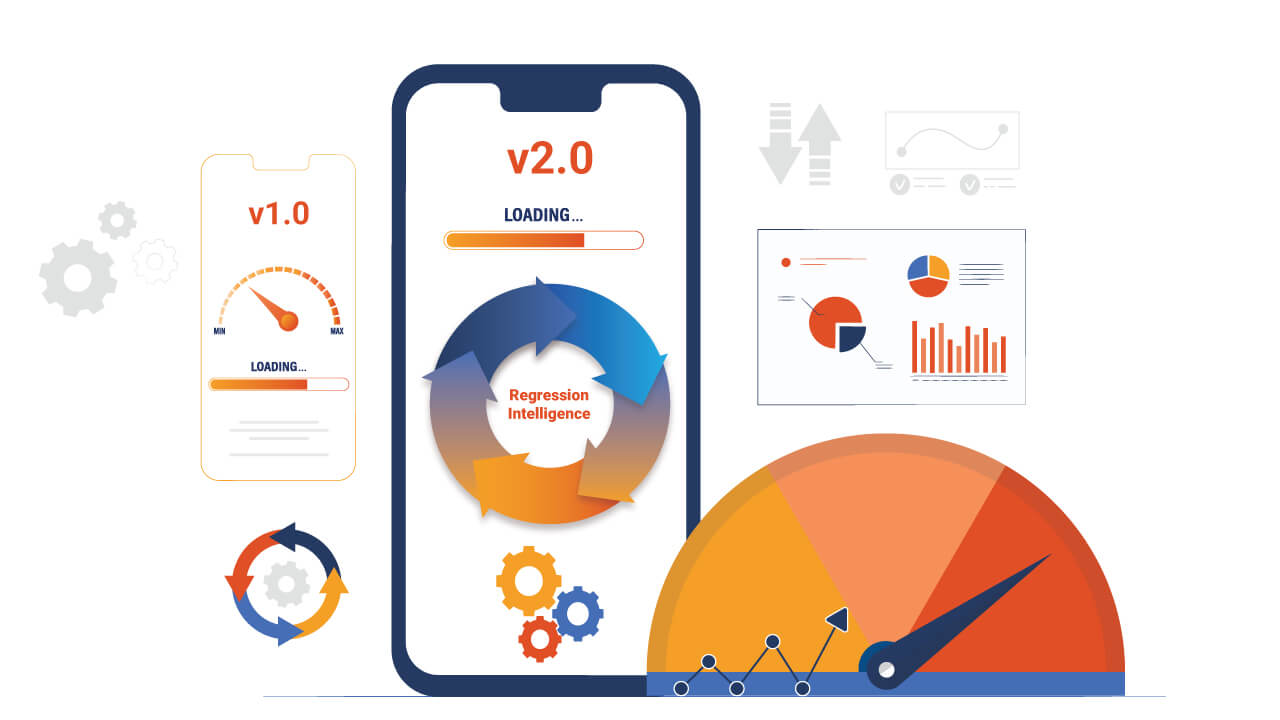
- Performance KPIs & Regression Intelligence: Track metrics like response time, frame rate, CPU, and memory. Identify performance regressions early with automated alerts and root cause analysis.
- Network Shaping and Throttling: Simulate 3G, 4G, 5G, and Wi-Fi conditions to understand how apps function and perform in low-bandwidth or high-latency environments.
- Grafana Dashboards for Observability: Correlate functional test outcomes with performance data in unified dashboards to monitor latency, throughput, and resource utilization in a single view.
By bridging both test types in one ecosystem, HeadSpin helps teams move from “it works” to “it performs perfectly for every user.”
Conclusion
The dual testing shift isn’t about replacing functional tests with performance tests; it’s about integrating both to build digital experiences that truly scale.
Functional testing ensures your app behaves correctly. Performance testing ensures it behaves consistently under pressure. Together, they form the foundation of reliable, user-centric digital-first products.
Ready to move from ‘it works’ to ‘it performs’?
Discover how HeadSpin helps you unify functional and performance testing on real devices, real networks, and real metrics.
FAQs
Q1. What’s the main difference between functional and performance testing?
Ans: Functional testing checks whether a feature works correctly. Performance testing evaluates how well a system performs under specific conditions, such as load, stress, or varying network speeds.
Q2. Why are both important for digital-first products?
Ans: Because real users experience both correctness and responsiveness simultaneously. Combining both ensures functionality remains consistent and fast.
Q3. What are standard frameworks for defining performance metrics?
Ans: ISO/IEC 25010 (Performance Efficiency) and ISO/IEC/IEEE 29119 (Software Testing) provide standard definitions for measurable performance quality.


Siddharth Singh
Senior Product Manager, HeadSpin Inc.





-1280X720-Final-2.jpg)