.png)


.png)



AI-Powered Key Takeaways


Table of Contents

Modern applications rarely deal with steady, predictable traffic.
One moment, everything is normal. Next, thousands of users show up at once, triggered by a flash sale, a payment deadline, a breaking news alert, or a major app update. These sudden surges are where many systems quietly fail.
This is exactly what spike testing is designed to uncover.
In this guide, we’ll break down what spike testing is, why it matters, how it fits into broader testing strategies like Black Box Testing, functional testing, regression testing, and non-functional testing, and how teams can apply it in real-world scenarios.
What Is Spike Testing?
Spike testing is a type of performance testing where an application is suddenly exposed to a sharp increase or decrease in user load, and its behavior is closely observed.
Instead of gradually increasing traffic, spike testing introduces an instant jump. Think of it like this: If 100 people usually enter a store every hour, spike testing asks, “What happens if 5,000 people try to enter in the same minute?”
Why Spike Testing Is Important
Many systems perform well under normal or even high load, but fail when traffic changes suddenly.
Spike testing helps answer critical questions:
- Does the application stay available during sudden traffic surges? (Availability during spike)
- Do users see slow screens, errors, or failed transactions? (User experience under load)
- Does the system recover quickly, or does it remain slow even after the spike ends? (Recovery time and residual impact)
Without spike testing, these issues often surface only in production, when real users are already impacted.
Where Spike Testing Fits in Software Testing
Spike testing is part of non-functional testing. It focuses on how a system behaves, not whether a specific feature works correctly.
Here’s how it fits alongside other common testing types:
Functional Testing
Functional testing checks whether features work as expected.
Example: Can a user log in? Can they complete a payment?
These tests usually run under normal load. Functional testing alone cannot reveal what happens when thousands of users perform the same action simultaneously.
Regression Testing
Regression testing ensures that new changes haven’t broken existing functionality.
Example: After a code update, does checkout still work?
However, a small backend change may not break functionality but could slow down the system; for example, due to increased traffic, the database load can increase.
Black Box Testing
Spike testing is often performed as Black Box Testing.
That means testers don’t need to know how the system is built internally. They apply load via APIs or user flows and observe outcomes such as response time, errors, and stability. This makes spike testing ideal for validating the real user experience.
Real-World Examples of When Spike Testing Is Needed
Spike testing is especially important for applications that experience sudden, unpredictable demand.
Example 1: Flash Sale
An e-commerce app announces a 10-minute sale. Thousands of users log in simultaneously, search for products, and try to check out.
Spike testing reveals whether:
- Login services slow down
- Payments fail under pressure
- The app recovers quickly once the sale ends
Spike testing works by subjecting an application to a sudden, extreme surge in user traffic (a "spike") over a very short period. This rapid stress helps identify whether the system can handle the peak load, how quickly services (such as login or payment) are affected by the pressure, and, critically, whether the system can stabilize and return to normal performance immediately after the spike subsides.
Example 2: Payment Deadline
A banking app sees a surge in users on the last day of bill payments.
Spike testing helps ensure:
- Transactions don’t time out
- Balances stay accurate
- Services don’t remain slow after peak usage
Spike testing helps ensure these points by simulating sudden, massive increases and decreases in user load to see whether the system can withstand the extreme stress and quickly recover to normal performance levels without data corruption or persistent slowness.
Example 3: App Update Release
After an update, many users open the app at once.
Spike testing checks:
- Startup time under sudden load
- Configuration and authentication stability
- Backend readiness for mass reconnects
Spike testing measures system behavior when the number of users or load volume suddenly increases, often by several multiples, and then drops back down. It checks if the system can handle the abrupt surge without performance degradation or failure and recover quickly.
Also read - What is Endurance Testing? A Comprehensive Guide
How HeadSpin Helps Teams Perform Realistic Spike Testing
Spike testing is usually driven by a load tool (to create the sudden surge). The gap is that load graphs alone don’t tell you what users actually experienced on real devices. HeadSpin is built to close that gap in three concrete ways:
1) Validate real user journeys on real devices while the spike is happening
During a spike, users don’t complain that “RPS dropped”, they complain that login hung, checkout failed, or the screen froze. HeadSpin captures session-level performance on real devices and real networks, so you can see how critical flows behave when the backend is under sudden pressure.
2) Measure bottlenecks
Spikes can trigger client-side issues too, especially on mobile: CPU spikes, memory pressure, battery drain, and network instability can turn a survivable backend event into a broken user experience. HeadSpin tracks 130+ KPIs across app, device, and network parameters, helping teams pinpoint whether the spike failure was server-side, device-side, or both.
Examples of “what actually broke” you can confirm:
- CPU or memory pressure is causing UI stalls during peak
- Network latency or packet loss is making retries explode
- Battery or thermal impact during sustained bursts
3) Turn spike results into build-to-build proof, not one-off observations
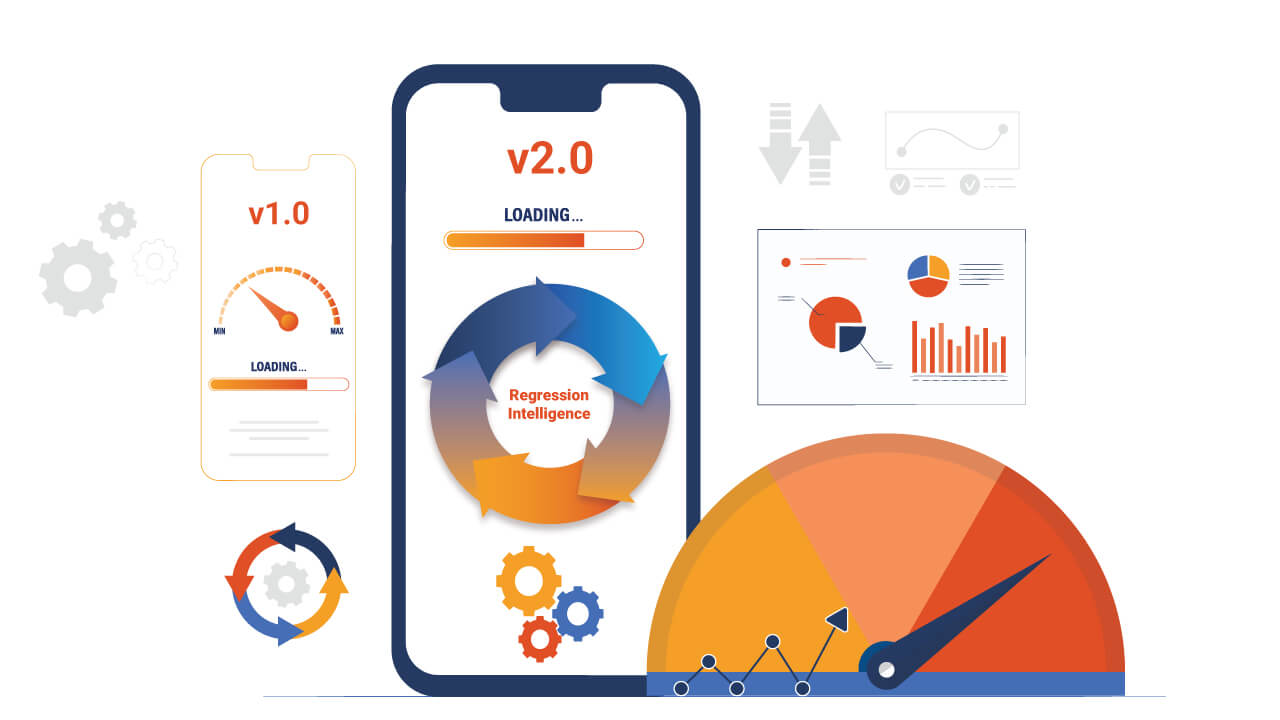
Spike testing is most valuable when it’s repeatable. HeadSpin’s Regression Intelligence is designed for comparing sessions across builds and flagging performance regressions using built-in and custom KPIs, so you can detect when a new release made spike behavior worse (even if functional flows still “work”).
This is especially useful for:
- “Recovery time got worse after the last release”
- “Checkout errors only appear under sudden bursts now”
- “Same test, same spike pattern, but higher p95/p99 latency”
4) Visualize and alert on spike behavior with Grafana dashboards
HeadSpin includes Grafana dashboards inside the platform so teams can slice and compare performance by build, device, OS, region, time window, and more, and set alert thresholds for KPIs. This helps you monitor what happened during the spike, and automate detection when it happens again.
Conclusion
Sudden traffic spikes are a reality for modern applications. Spike testing helps teams understand how their systems behave when demand changes instantly, not gradually, and whether they recover quickly once the surge ends. As part of non-functional testing, it complements functional testing and regression testing by exposing issues that only appear under real-world pressure.
But load results alone don’t reflect what users experience. HeadSpin adds that missing layer by validating spike behavior on real devices, capturing device and network KPIs, and comparing performance across builds. This helps teams move beyond “the system stayed up” to knowing whether users could still complete critical journeys when it mattered most.
FAQs
Q1. When should teams run spike testing?
Ans: Spike testing is most useful before events that can trigger sudden demand, such as product launches, flash sales, major marketing campaigns, payment deadlines, or large app updates. It’s also valuable after significant backend or infrastructure changes that could impact scalability or recovery behavior.
Q2. What are the biggest risks of skipping spike testing?
Ans: Without spike testing, applications may appear stable in testing but fail during real-world usage spikes. Common risks include slow logins, failed transactions, cascading retries, prolonged recovery times, and user frustration during peak moments when reliability matters most.


Siddharth Singh
Senior Product Manager, HeadSpin Inc.





-1280X720-Final-2.jpg)