.png)


.png)



AI-Powered Key Takeaways


Table of Contents

Introduction
Modern applications are rarely limited to one platform. The same product often runs across mobile apps, web applications, and OTT devices, all backed by shared services and APIs. While feature parity may exist, the user experience varies widely across device types, platform behaviour, and network conditions.
Many issues surface only when real users interact with the app on physical devices, over live networks, and from different locations. When this happens, teams are forced into reactive troubleshooting without enough visibility into what changed or why.
This blog explains the common challenges that lead to inconsistent app experiences and shows how teams use HeadSpin to validate behaviour, stability, and performance across mobile, web, and OTT.
Testing Challenges in Delivering Consistent App Experiences
Platform Differences Tested in Isolation
Mobile apps, web apps, and OTT devices (set-top boxes etc.) respond differently to the same backend logic. Mobile apps are affected by OS scheduling and hardware limits, web apps by browser engines and rendering behaviour, and OTT apps by the capabilities of the devices they run on. When these platforms are tested separately, teams cannot see how a single backend or release change affects behaviour across platforms.
Network Conditions Not Represented in Testing
Latency, routing, and bandwidth vary across regions, carriers, and ISPs. These differences change media delivery speed, and transaction completion. Test environments usually run on stable networks, which hides location-specific delays and failures.
Missing Visibility When Issues Reach Production
Simulators and emulators do not expose real device constraints or live network behaviour. When issues appear in production, teams often lack session-level data that shows which device, network, or step in the flow caused the failure. This slows investigation and correction.
Functional and Performance Validation Run Separately
Functional testing confirms that flows are complete. Performance testing measures system behaviour under load. When these checks are not combined, flows can pass validation while still being slow or unstable for users.
How Teams Use HeadSpin Across Mobile, Web, Streaming, and Monitoring
Mobile App Experience Validation
Mobile app experience can change based on device hardware, OS versions, and mobile network behaviour. A flow that works on one device or OS version may fail, slow down, or behave inconsistently on another. Because of this variability, mobile app testing cannot stop at basic functional checks.
Teams use HeadSpin to validate complete mobile app experience, starting with functional correctness and extending through performance behaviour and regression tracking, all on physical devices connected to real mobile networks.
At the functional level, teams test end-to-end flows such as authentication, payments, notifications, and account access on real devices. This confirms that features work together correctly across devices and OS versions, not just in isolation.
Once functional behaviour is validated, teams monitor performance within the same test sessions. HeadSpin captures key performance indicators such as:
- Screen load and transition times
- CPU and memory usage during app interaction
- Network latency and request timing over real carrier networks
This allows teams to see not just whether a flow works, but how well it performs under real conditions. For example, a payment flow may complete successfully but show increased response time on specific devices or carriers.
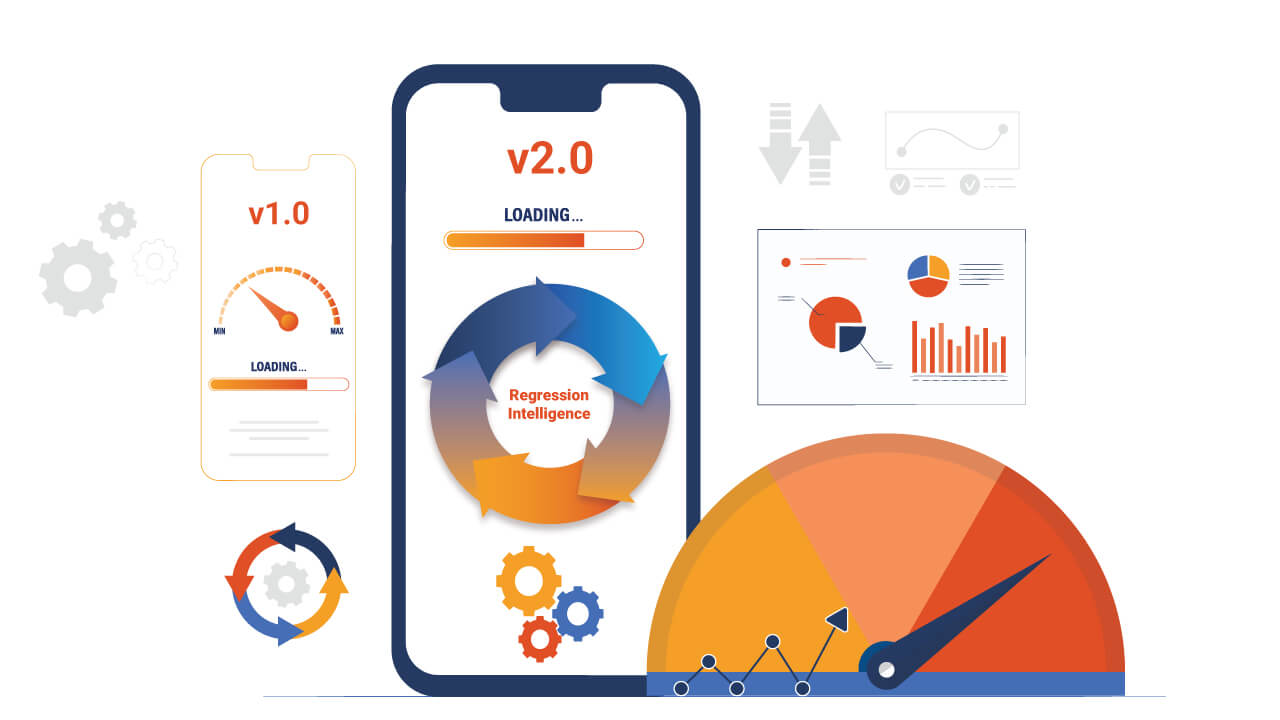
As testing continues across builds, teams leverage HeadSpin’s Regression Intelligence to automate build-over-build comparisons and catch issues introduced by recent app updates. This analysis helps surface problems such as:
- A flow that was previously stable now failing on specific devices
- Key performance indicators degrading after a release
- Increases in network-related delays under similar conditions
HeadSpin’s Regression Intelligence automates comparison of performance across builds and tracks relevant performance KPIs, helping teams detect regressions early and understand regression results in context, rather than relying on manual comparisons or user reports.
Web App Experience Validation
Web app experience varies across browsers, platforms, and rendering engines. A flow that works correctly in one browser may behave differently in another due to differences in rendering, JavaScript execution, or resource handling. Many of these issues do not appear during initial page load and surface only after users begin interacting with the application.
Teams use HeadSpin to validate a complete web app experience on real devices, starting with functional behaviour and extending into performance monitoring and regression tracking.
At the functional level, teams validate behaviour and layout consistency across browsers using real devices. Core user flows are exercised across desktop and mobile web to confirm that interactions, state transitions, and UI rendering remain consistent across browsers and form factors.
Once functional behaviour is confirmed, teams analyse performance within the same web sessions. Instead of focusing only on page load time, HeadSpin surfaces what happens during real interaction, including:
- API calls triggered by user actions
- Timing of asynchronous content loading
- Delays introduced by dynamic rendering and client-side logic
Resource loading patterns that affect responsiveness
Key web performance indicators are captured during these flows, such as:
- Time to interactive for user actions
- Page load times
- Network request sequencing and dependency impact.
OTT App Experience Validation
OTT applications depend heavily on device capability, input handling, and network stability. Issues often surface only on specific devices or in certain regions.
Teams use HeadSpin to test navigation and playback on real OTT devices, including Apple TV, Amazon Fire TV Stick, Roku, and Android TV devices. This includes app launch time, playback start, buffering behaviour, UI responsiveness, and DRM-protected content using HeadSpin AV Box deployments.
Streaming behaviour is evaluated across regions to understand how network conditions and content delivery affect playback consistency. This visibility helps teams explain why the same stream performs differently across locations.
Digital Experience Monitoring in Production
User experience does not remain static after release. Traffic patterns change, backend updates are deployed, and network conditions evolve.
HeadSpin extends visibility into production by continuously monitoring critical user journeys. When experience drops occur, teams can review session data alongside network and performance metrics to see exactly what changed.
This correlation shortens diagnosis time and helps teams respond to real user experience issues rather than relying solely on user complaints.
Example: A media app releases a backend update that does not change any UI flows. Functional tests pass, and the release goes live. A few hours later, users in one region start abandoning playback during the first 10 seconds.
With HeadSpin’s digital experience monitoring in production, teams see that:
- Playback start time has increased only on one ISP
- Page load times
- Network timing data shows increased latency on the first request in the playback flow
Because session data, network metrics, and performance KPIs are visible together, the team can trace the issue to the backend change interacting poorly with that specific network path. The issue is addressed before it escalates into widespread user complaints or support tickets.
Conclusion
Testing in controlled environments is no longer enough to deliver consistent app experiences across mobile, web, and OTT. Real devices and real networks expose behaviour that isolated testing cannot.
HeadSpin helps teams observe how user journeys actually behave across platforms and conditions. By connecting functional behaviour, performance data, and network insights within the same workflows, teams move from assumption-driven testing to measurable experience validation.
This shift reduces production surprises and helps teams deliver experiences that hold up where it matters most, in real users' hands.
See Where Your App Experience Changes Across Real Conditions With Headspin! Connect Now
FAQs
Q1. Why is cross-browser testing still necessary when the web app works in one browser?
Ans: Different browsers handle rendering, scripting, and media differently. A web app that works correctly in one browser can show layout issues, interaction delays, or inconsistent behaviour in another. Cross-browser testing helps teams ensure users have a consistent experience regardless of the browser they use.
Q2. Why is experience monitoring needed even after an app is released?
Ans: User experience can change after release due to traffic shifts, backend updates, or network changes. Monitoring real usage helps teams detect experience drops early and understand what changed, instead of waiting for user complaints or support tickets.


Debangan Samanta
Product Manager, HeadSpin Inc.





-1280X720-Final-2.jpg)