.png)


.png)


AI-Powered Key Takeaways


Table of Contents

Digital-native apps run on speed. New releases go out constantly, experiments run every week, and user expectations shift just as fast. With that pace, you can’t afford to wait for issues to appear in production. You need a way to know whether a new build introduces a slowdown, breaks a flow, or behaves differently across devices and networks.
That’s where synthetic monitoring becomes the backbone of modern Digital Native App Testing.
Real-User Monitoring (RUM) is valuable. It helps you understand the long tail of real user behavior and long-term trends. But when it comes to catching issues before they reach users, validating every release, and making decisions with confidence, synthetic monitoring is the approach digital-native brands rely on.
This blog breaks down why synthetic monitoring is the strategic choice, why digital-native teams depend on it, and how platforms like HeadSpin elevate it through real devices, real networks, and deep performance insights.
Why monitoring is different for digital-native apps
Digital-native brands are built around speed: rapid feature releases, constant user experience iteration, and more. That velocity creates a few non-negotiable monitoring needs:
- You need to know if a new build breaks a core journey before you roll it out widely.
- You need consistency across geographies, devices, and networks, not just in a lab or on a single flagship phone.
- You need to see the compound effect of app logic, OS behavior, and network conditions on the real user experience.
Modern quality and monitoring trends already reflect this: synthetic monitoring, deeper performance analytics, and continuous validation are becoming standard parts of QA strategy for fast-moving teams.
So the question is less "Synthetic Monitoring vs Real-User Monitoring, which one wins?" and more "How do we design Digital Native App Testing to align with real device behavior?"
Also Read - How Digital-Native Brands Achieve True QA Cost Optimization
What is synthetic monitoring?
Synthetic monitoring (also called active or proactive monitoring) uses scripted user journeys that run on a schedule from specific locations or environments. These scripts simulate what a user does in your app, for example:
- Open app, log in, browse a product, add to cart, start checkout
- Open video player, search, play content, change quality
The key distinction is why and where these journeys run.
Synthetic monitoring is not triggered by code merges or releases. It runs continuously in production to verify that critical services, dependencies, and user flows remain available and performant throughout the day, even when no new build has been deployed.
Behind the scenes, the system measures performance and availability for each step: response times, error codes, content load times, and more.
Key strengths of synthetic monitoring
- Proactive: You find problems before real users hit them, even at 3 a.m. on a low-traffic day.
- Controlled environment: Same script, same path, consistent network profile or device type, which makes comparing builds and releases straightforward.
- Great for critical paths: You can lock in high-value flows (signup, payment, search, stream start) and continuously validate them.
- Easy regression comparison: Scripted journeys are ideal for build-to-build comparison and regression alerting.
Limitations
- Synthetic journeys only cover what you script. It does not directly show user sentiment or behavior trends.
For Digital Native App Testing, synthetic monitoring is your early warning system and regression safety net.
What is real-user monitoring?
Real-user monitoring (RUM) passively collects telemetry from actual user sessions in production. It gives you a clear understanding of your users and their experiences using your app. A lightweight SDK or tag records performance metrics and context each time users interact with your app or site.
Think of RUM as a continuous "black box recorder" for real usage:
- How long did the app launch take on that specific device, OS, and network type?
- Where do drop-offs happen in a real checkout funnel?
- What are the performance characteristics in markets you do not test heavily in the lab?
Key strengths of real-user monitoring
- Real behavior, real environments: RUM captures the actual diversity of devices, networks, locales, and user paths.
- Long-term trends: You can see how performance changes over weeks and months, correlate it with releases, and track user experience scores over time.
- Deep production diagnostics: RUM helps you understand what users did right before a crash or experience issue.
Limitations
- RUM usually reports problems after users have already experienced them.
- Potential privacy and implementation overhead if not designed carefully.
For digital natives, RUM is your "what actually happened in the wild" lens.
Read More - The Importance of Testing in Real-World Environments for Digital-Native Apps
Where synthetic monitoring shines for digital-native apps
Digital-native brands often run experiments constantly: new flows, new personalization, pricing tweaks, and new content. Synthetic monitoring becomes especially valuable when you need to:
- Establish performance baselines rollout: Rather than waiting for real-user data, use synthetic monitoring to track how new builds perform against historical benchmarks in staging.
- Protect critical revenue paths: Flows like log in, search, add to cart, and payment cannot break. Synthetic journeys continuously traverse these paths, so the team is alerted if page load times, API latency, or error rates drift beyond acceptable thresholds.
- Monitor regional performance 24/7: Since your team cannot be everywhere at once, synthetic monitoring serves as a constant presence across cities and countries. It provides a steady stream of data on how your app performs on local networks and devices globally. This ensures you are the first to know if users in a specific region experience slow load times or connection errors, even if everything looks fine from your home office.
How HeadSpin brings synthetic and real conditions together
Here is how HeadSpin fits into this Synthetic Monitoring vs Real-User Monitoring landscape for Digital Native App Testing:
1. Synthetic journeys on real devices and networks
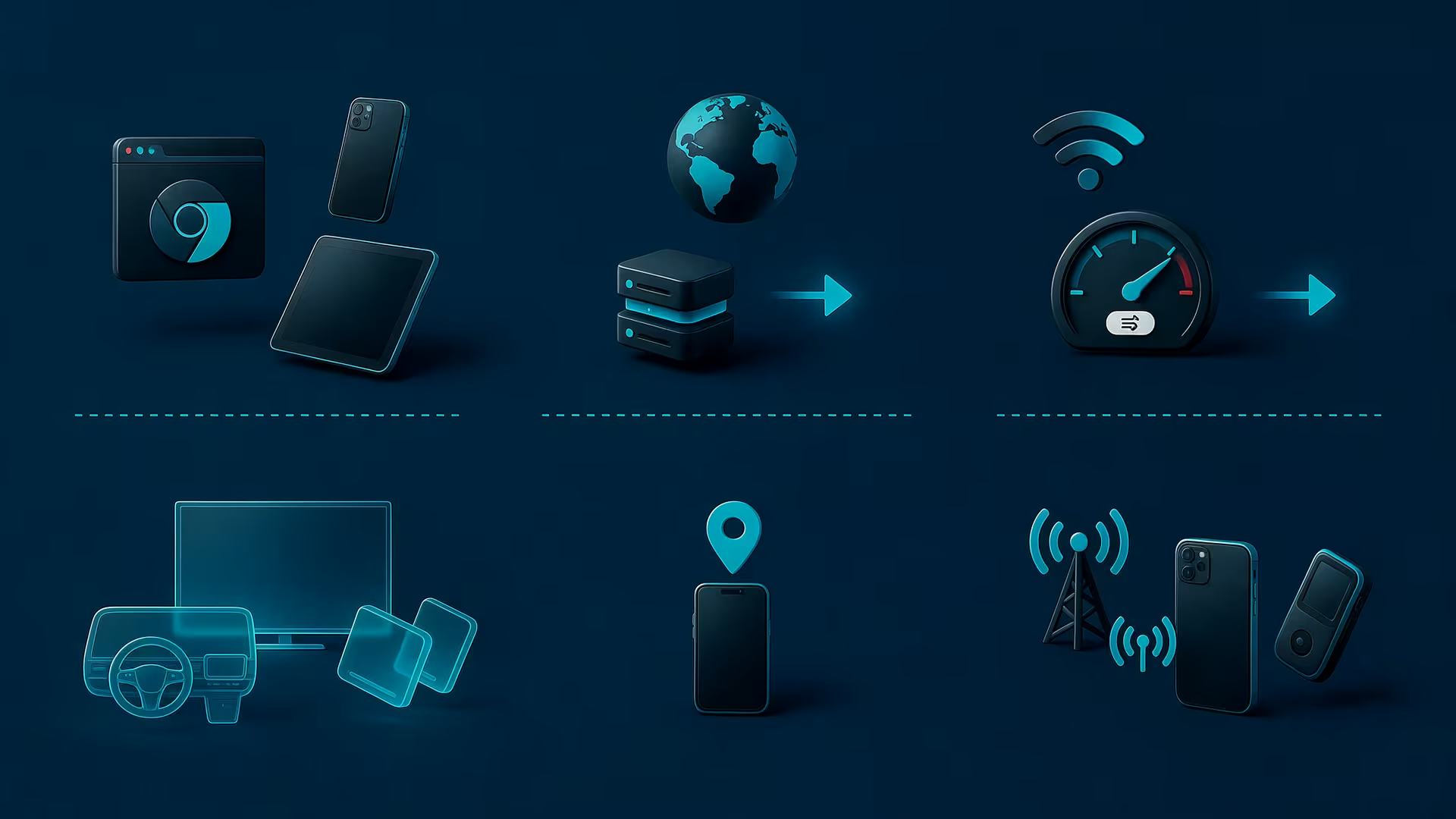
HeadSpin lets you run automated user journeys on real mobile devices, browsers, and smart TVs in 50+ locations, under realistic network conditions like WiFi, 4G, and 5G.
This synthetic data is grounded in real device behavior and can help you:
- Capture app, network, device, and experience KPIs for each step in the journey.
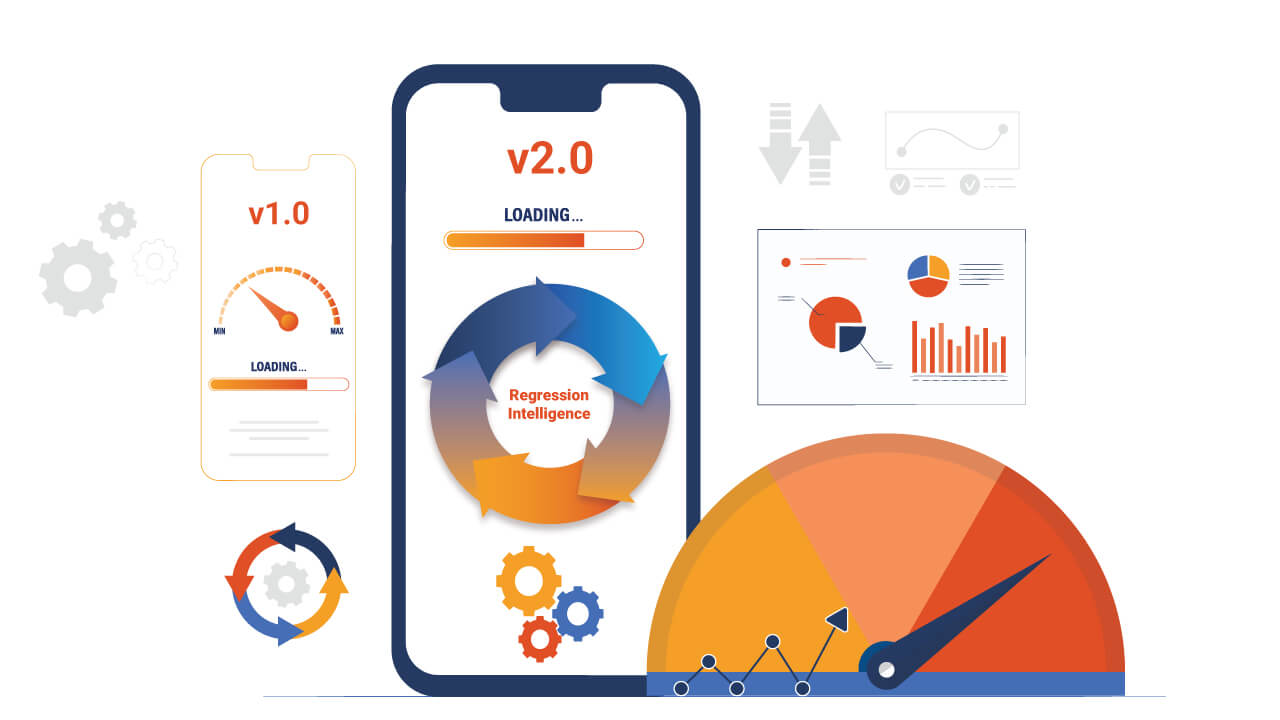
- Compare builds with Regression Intelligence and get alerts when performance regresses.
2. Deep, multi-layer KPIs instead of surface-level metrics
HeadSpin tracks 130+ KPIs, including app launch time, page load times, CPU and memory usage, battery drain, network latency, packet loss, and media quality metrics.
This is crucial when you are aligning synthetic sessions with real user expectations:
- You are not just checking whether a page loaded; you are seeing how the device and network behaved during that load.
- You can correlate synthetic results with production trends to decide what "good enough" really means for your users and your brand.
3. Tailored Digital Native App Testing workflows
HeadSpin helps digital-native apps focus on high-velocity teams that need scalable automation, low infrastructure overhead, and real-world experience validation.
Examples:
- Run Digital Native App Testing across multiple channels such as mobile, web, and OTT, in a single environment.
- Use issue cards and actionable insights to quickly identify whether a regression is caused by the app, the device, or the network.
4. Flexible deployment to match your monitoring strategy
HeadSpin is a cloud device farm that gives you access to dedicated devices, or you can deploy on your on-premise infrastructure, depending on how tightly you want to couple monitoring with your environments and data controls.
That means you can:
- Keep testing close to your production stack in regulated or privacy-sensitive scenarios.
- Still benefit from synthetic journeys on real devices that mirror your actual user base.
HeadSpin does not replace RUM tools that collect passive data from all production users. Instead, it gives digital natives high-fidelity synthetic monitoring on real devices and networks, along with rich analytics of those sessions.
Conclusion
For digital-native brands, monitoring must do more than report what went wrong. It must prevent issues before users ever feel them. That’s why synthetic monitoring, especially when powered by real devices and networks, is the smarter, more strategic choice.
RUM has value in understanding broad user trends, but it cannot replace the proactive, controlled, regression-ready power of synthetic testing.
If you want your app to stay fast, stable, and user experience aligned at scale, synthetic testing isn’t optional. It’s your safety net, your quality gate, and your competitive edge. HeadSpin can help with this.
FAQs
Q1. How do I decide which user journeys to script for synthetic monitoring?
Ans: Start with the flows that are both high impact and high risk: onboarding, login, search, payments, video start-up, and any action that directly affects revenue or retention. Synthetic tests work best when they mirror the moments where performance failures hurt the most.
Q2. Can synthetic monitoring detect device-level performance issues, such as CPU spikes or battery drain?
Ans: Yes, if the platform supports deep device telemetry like HeadSpin. HeadSpin allows you to test on real devices, where synthetic tests can reveal whether a build increases CPU load, memory usage, or battery consumption even if the core functionality appears fine. These issues rarely show up in backend logs, so controlled device-level checks are essential.


Debangan Samanta
Product Manager, HeadSpin Inc.





-1280X720-Final-2.jpg)